Editor’s Note: None of the Linux distributions on this list have implemented age verification as of this writing, despite ongoing legislative pressure in the US and Brazil.
As we move through 2026, the Linux distribution landscape has shifted more noticeably than it has in years, with new names breaking into the top 10, old favorites holding their ground, and a few distros that dominated the conversation for over a decade quietly slipping down the chart.
DistroWatch has been tracking Linux distributions since 2001 and remains the most widely referenced source of information about open-source operating systems.
With a particular focus on Linux distributions and flavors of BSD. It collects and presents a wealth of information consistently, from release announcements and package comparisons to user reviews and version histories.
Before we get into the list, one thing is worth saying plainly: DistroWatch’s Page Hit Ranking (PHR) measures how many times a distribution’s page on the site was visited each day, with a maximum of one hit per IP address per day to reduce inflation. It does not measure installed user base, download counts, or real-world usage.
DistroWatch itself says the rankings “correlate neither to usage nor to quality, and should not be used to measure the market share of distributions“.
So think of this list as a map of what the Linux community has been paying attention to in 2026, covering which distros people are researching, discussing, and exploring, and you’ll have exactly the right mental model for what follows.
With that said, community interest is still a useful signal, especially if you’re a new user trying to figure out which distros have active communities, regular releases, and good documentation behind them.
To find out which distributions have generated the most interest so far in 2026, head to the DistroWatch homepage and use the Page Hit Ranking dropdown to select your preferred time window: last 7 days, 1 month, 3 months, 6 months, or 12 months.
In this post, we’ll review the 10 most talked-about Linux distributions of 2026 based on DistroWatch PHR, in descending order, as of May 2026.
10. Ubuntu
Perhaps no distribution needs less of an introduction. Ubuntu, maintained by Canonical, has spent years as the first name people reach for when someone asks “what Linux should I install?” and it remains on this list despite slipping a few positions from where it sat just 2 years ago.
Ubuntu is based on Debian and ships in a 6-month regular release cycle alongside Long-Term Support (LTS) versions that receive 5 years of free security updates, extendable to 10 years with Ubuntu Pro.
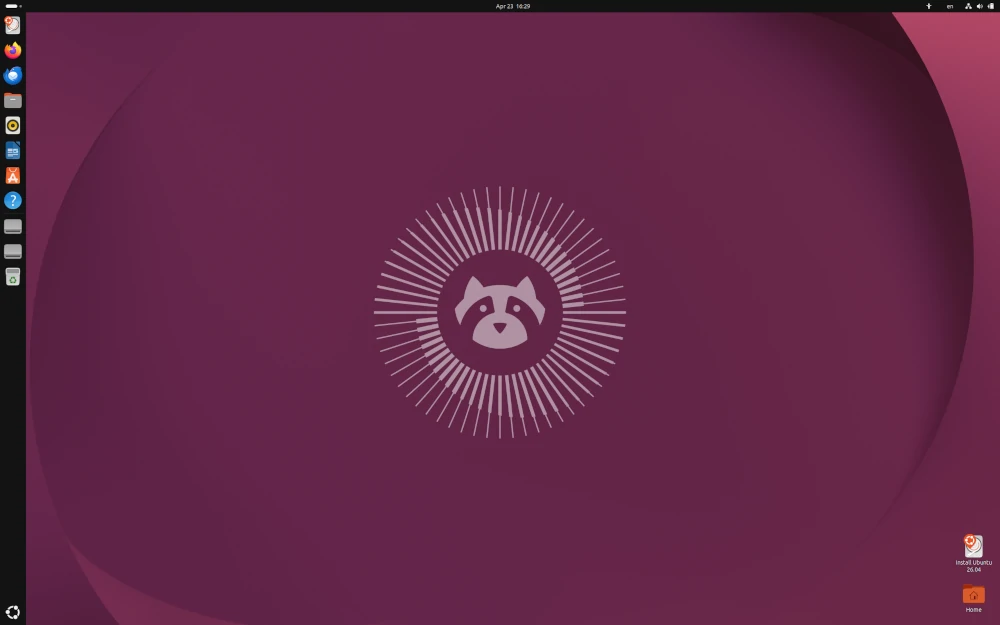
The latest release, Ubuntu 26.04 LTS “Resolute Raccoon“, landed on April 23, 2026, and it’s a significant jump from 24.04, shipping with Linux kernel 7.0, GNOME 50, a fully Wayland-only desktop session with X11 support removed from GDM, and TPM-based full disk encryption enabled by default during installation.
The LTS track explains why Ubuntu’s actual installed base almost certainly dwarfs its DistroWatch rank, since enterprise and server users rarely browse DistroWatch out of curiosity.
What keeps Ubuntu relevant for new users is the sheer size of the ecosystem around it, since documentation, community forums, compatible packages, and cloud platform support are all deeper for Ubuntu than almost any other distro on this list.
9. Manjaro
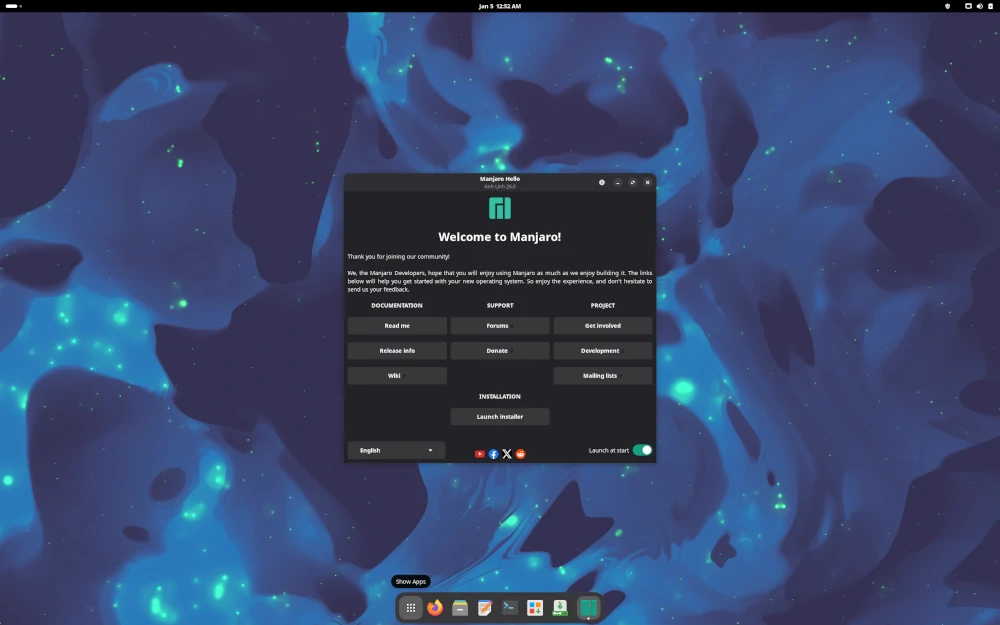
Based on Arch Linux, Manjaro continues to serve users who want the power and flexibility of Arch without the manual installation process. It ships with preinstalled desktop environments, graphical applications including a software center, and multimedia codecs to handle audio and video out of the box.
Manjaro holds packages back for roughly 2 weeks of additional testing before releasing them to users, which gives it a slightly more stable rolling-release experience than pure Arch while still keeping software reasonably current.
Manjaro 26.0, released in January 2026, is the current version, shipping 3 official editions, KDE Plasma, GNOME, and Xfce, all well-configured and ready to use.
The pamac package manager is one of Manjaro’s strongest features, giving both a GUI and CLI interface to Arch’s AUR while making dependency resolution significantly more approachable for users coming from Debian-based systems.
8. Fedora
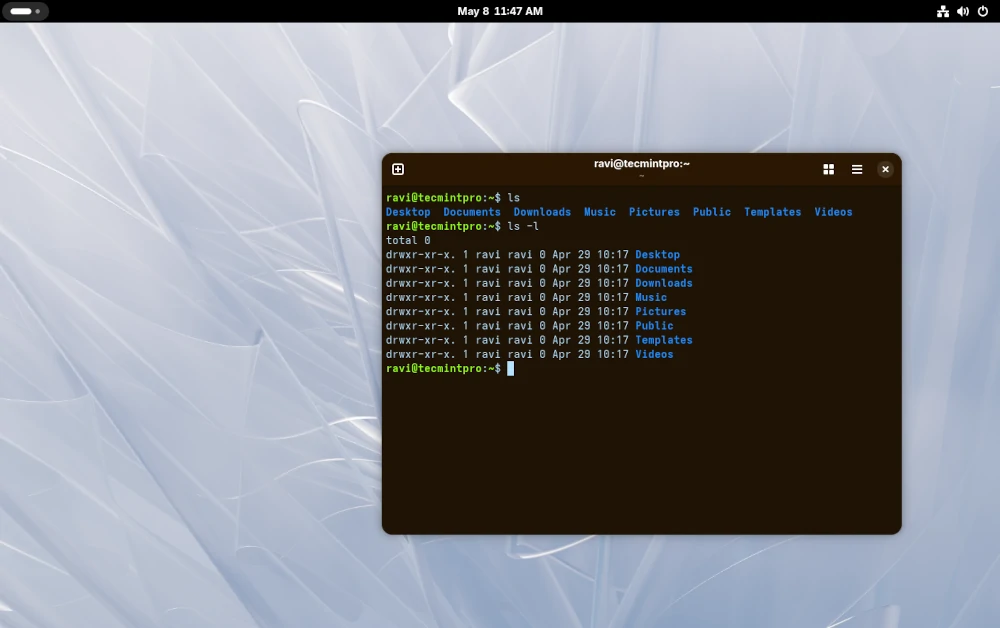
Fedora, built and maintained by the Fedora Project and sponsored by Red Hat, has consistently held its ground as one of the most technically current distributions available. It comes in 3 main variants, Workstation for desktops, Server edition, and Cloud image, along with ARM builds for headless servers.
Fedora’s defining characteristic is that it’s always at the front of integrating new package versions and technologies into the distribution, which makes it the closest thing to a “preview channel” for what eventually lands in Red Hat Enterprise Linux.
Fedora 44, released on May 1, 2026, is the latest version, shipping with GNOME 48, the Linux 6.14 kernel, GCC 15, and an updated Anaconda installer with improved disk management.
For sysadmins who work in RHEL environments and want a desktop that mirrors what they’re administering on the server side, Fedora is a natural fit and one I’d genuinely recommend over Ubuntu in those scenarios.
7. EndeavourOS
EndeavourOS has quickly become a favorite among users who want the genuine Arch Linux experience without the hours-long manual installation, and it’s been climbing the DistroWatch chart steadily since 2022.
Unlike Manjaro, it doesn’t maintain its own repositories or hold packages back, so you get the same vanilla Arch repos, the same AUR, and the same rolling-release cycle, just with a Calamares-based graphical installer and a welcoming community.
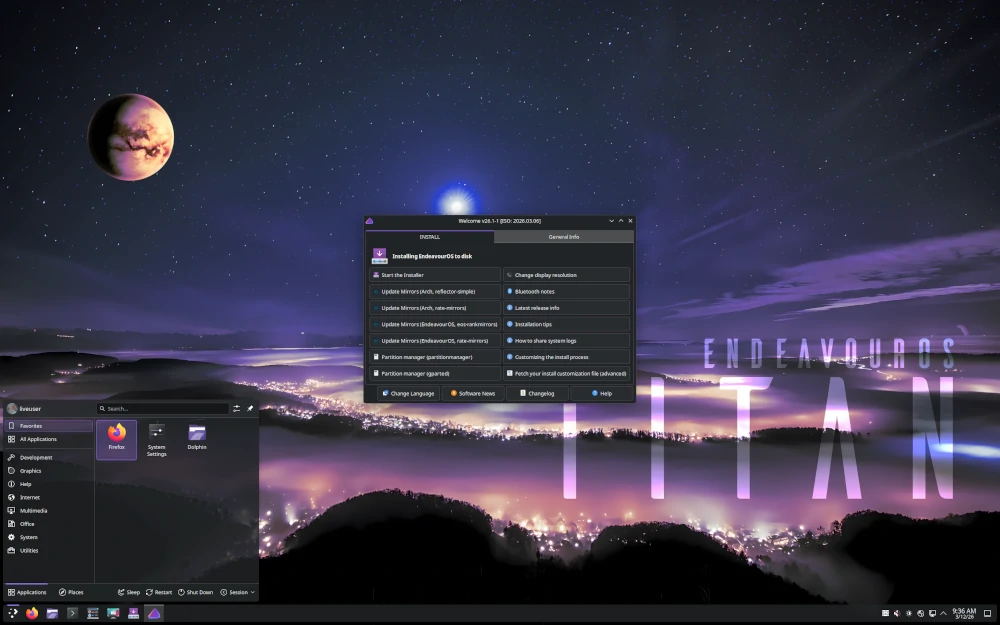
The latest release, “Titan-Neo” (April 27, 2026), ships with KDE Plasma 6.5, the Linux 6.18 LTS kernel, Mesa 25.3.3, and a clean minimal installation that offers a full menu of desktop environment choices during setup, including KDE Plasma, GNOME, Xfce, MATE, Cinnamon, Budgie, LXQt, Sway, Hyprland, and more.
What sets EndeavourOS apart beyond the installer is its community culture, which actively encourages learning rather than just copy-pasting commands from a forum, and that philosophy shows in the quality of its support threads.
6. Zorin OS
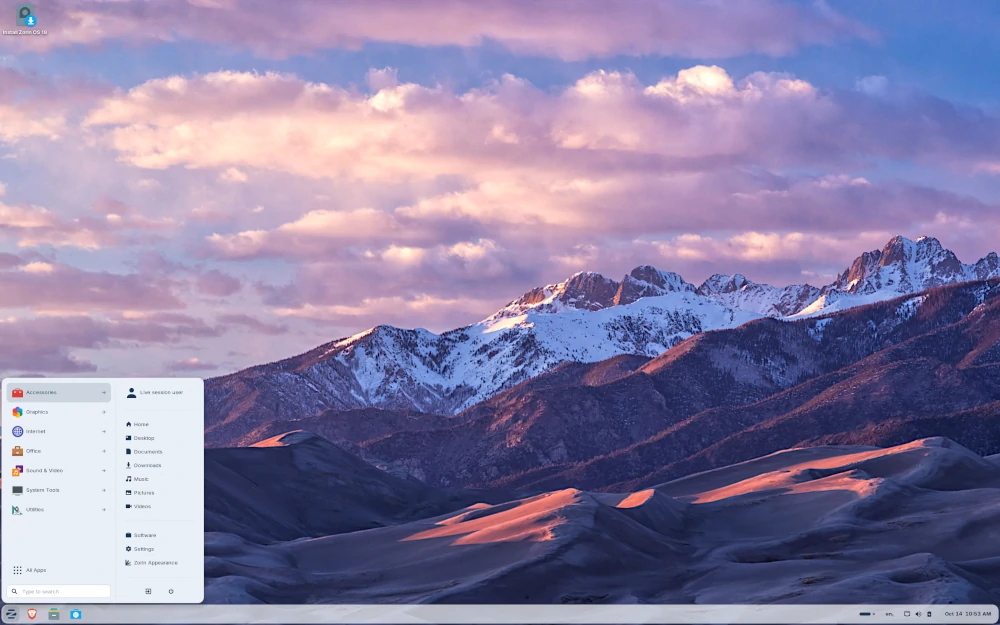
Zorin OS is based on Ubuntu and is designed from the ground up to make the transition from Windows as smooth as possible. It’s climbed into the top 10 over the past 2 years largely because Windows 10 reached end of life in October 2025, which drove a wave of users looking for a replacement and landing on Zorin as one of the most Windows-like options available.
Zorin ships with a polished GNOME-based desktop that can be configured to look and behave like Windows 11, Windows 10, or macOS through its built-in “Zorin Appearance” tool, which is a genuinely useful feature for users whose muscle memory is deeply tied to a Windows workflow.
The latest release, Zorin OS 18.1 (April 15, 2026), added smarter window tiling, an expanded app database that now recognizes over 240 Windows application installers and suggests native Linux alternatives, and runs on kernel 6.17 for better driver support including gaming handhelds. Existing Zorin 17 users can upgrade in place without erasing files, and the distro is supported with security updates through June 2029.
For anyone recommending Linux to a friend or family member who’s replacing an aging Windows machine, Zorin is one of the most defensible choices on this list.
5. Debian
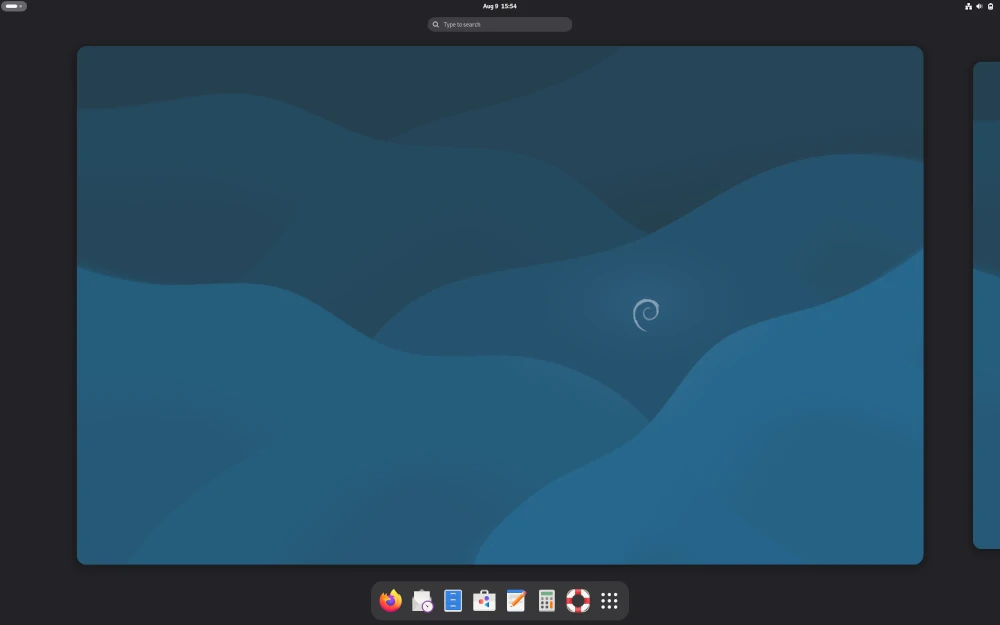
As a rock-solid Linux distribution, Debian is so committed to free software that it will always remain 100% free, though it also allows users to install and use non-free software on their machines when needed. It runs both desktop and server computers and forms the infrastructure layer behind a significant portion of the cloud.
Debian is one of the 2 oldest and most famous Linux distributions, and it’s the direct base for Ubuntu, Linux Mint, MX Linux, Zorin OS, and dozens of others on this list.
The current stable release, Debian 13.4 “Trixie,” first released on August 9, 2025 and updated to 13.4 on March 14, 2026, ships with the Linux 6.12 LTS kernel, GNOME 48, KDE Plasma 6.3, GCC 14, OpenSSH 10.0p1, Python 3.13, and over 70,000 packages in total.
Debian 13 will receive full support through August 2028 and long-term security support through 2030. Debian’s strength is still most visible in server environments, but the desktop edition has seen real improvements in both usability and visual polish with the Trixie release.
4. Pop!_OS
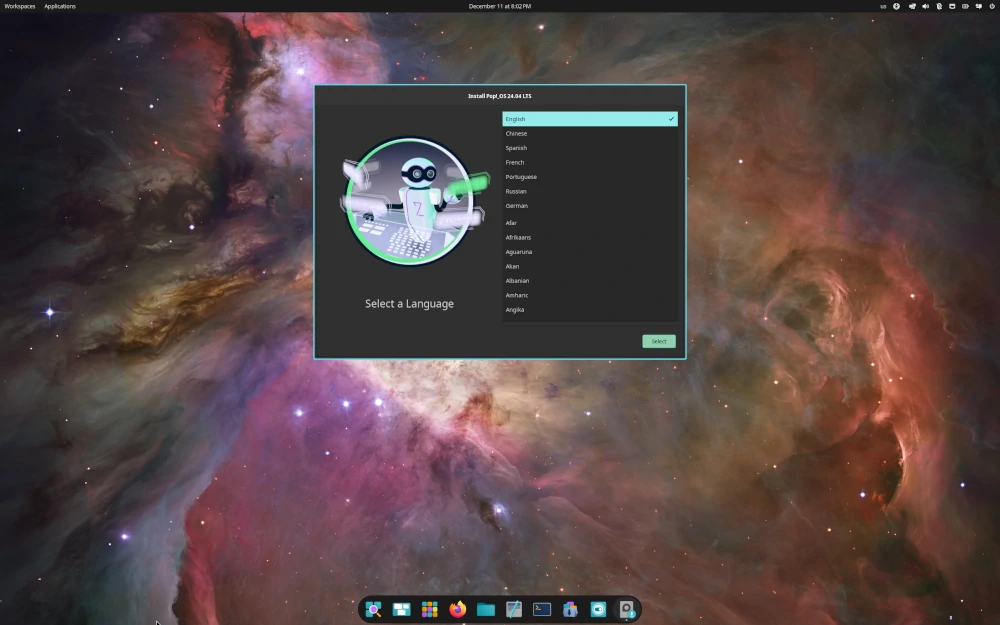
Developed by System76, Pop!_OS has gained serious traction among developers, gamers, and professionals who need a streamlined and efficient environment.
Pop!_OS 24.04 LTS with the stable COSMIC desktop environment launched in December 2025, a fully custom Rust-based DE built from scratch using the Iced toolkit, replacing GNOME entirely and delivering a noticeably faster, more fluid, and Wayland-native experience.
Pop!_OS comes with excellent hardware support, particularly for System76 machines, but it also works well across a wide range of third-party hardware.
Its NVIDIA out-of-the-box support has historically been one of the best of any Linux distribution, which explains a large part of its appeal to gamers and ML engineers who need reliable GPU access without post-install driver wrestling.
3. MX Linux
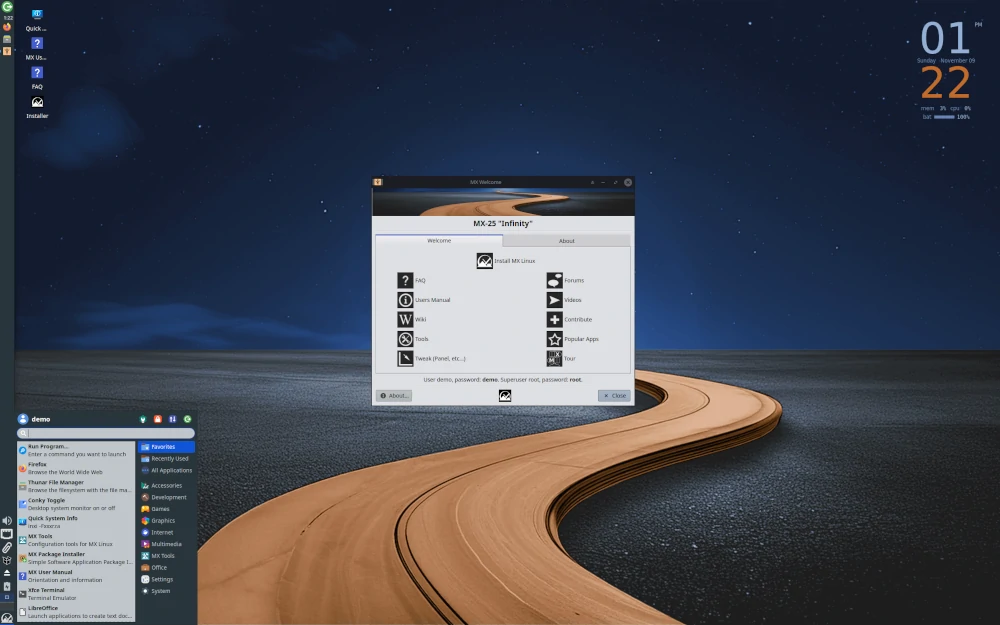
MX Linux continues to be a top contender in the Linux world due to its high stability, elegant and efficient desktop, and low barrier to entry. It’s a midweight, desktop-oriented Linux distribution based on Debian Stable, built for all types of users and applications with solid performance and a medium-sized footprint.
One of MX Linux‘s most distinctive characteristics is that it ships with systemd included but disabled by default, using antiX-live-system and sysVinit with elogind to handle what systemd would normally manage.
The MX Tools suite, a collection of graphical utilities for system management, backups, live USB creation, and more, is genuinely among the best tooling any desktop Linux distro ships out of the box.
MX Linux 25.1 “Infinity“, released January 19, 2026, is the current version, now running on Debian 13 “Trixie” as its base and introducing dual-init support, meaning both systemd and sysVinit ship on the same ISO and the user can choose their init system from the live boot menu before installation.
The consistent DistroWatch presence reflects a community that’s been engaged with the distribution for years rather than a flash of curiosity driven by a new release.
2. Linux Mint
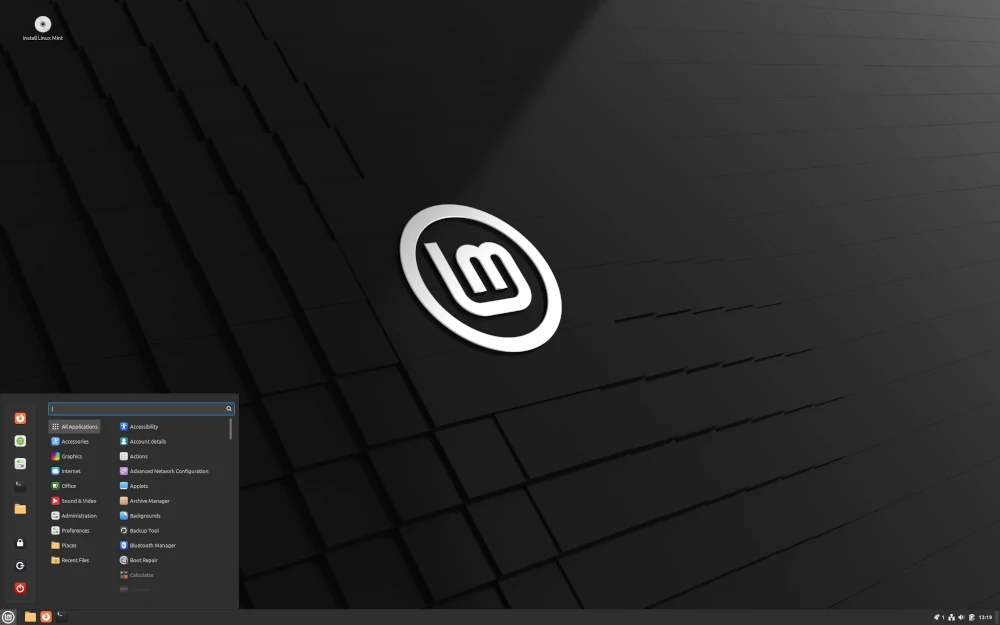
Linux Mint‘s well-known motto, “From freedom came elegance“, has earned its place near the top of this chart year after year, and 2026 is no different. Based on Ubuntu LTS, it’s a stable, complete, and genuinely pleasant desktop Linux distribution that has onboarded more Windows converts than probably any other distro on this list.
Among Mint’s most distinguishing features is the choice of desktop environment at installation, Cinnamon, MATE, or Xfce, and the guarantee that once installed, your music and video files will play without any extra configuration steps since multimedia codecs come included in the standard installation.
The Cinnamon desktop, developed by the Mint team themselves, is one of the most polished and configurable Linux desktop environments available, and it’s why Mint often comes up first when someone asks for a Linux desktop that feels finished rather than assembled.
Linux Mint 22.3 “Zena“, released January 2026, is the current version, based on Ubuntu 24.04 LTS and shipping with Cinnamon 6.4, improved Wayland support, a new Bluetooth management tool, and tighter integration with the Timeshift backup system that Mint now officially maintains.
The next major release, Mint 23 “Alfa“, won’t arrive until Christmas 2026, since the team announced a longer development cycle to give Cinnamon’s full Wayland support more time to mature, so 22.3 will be the stable version for most of 2026.
1. CachyOS
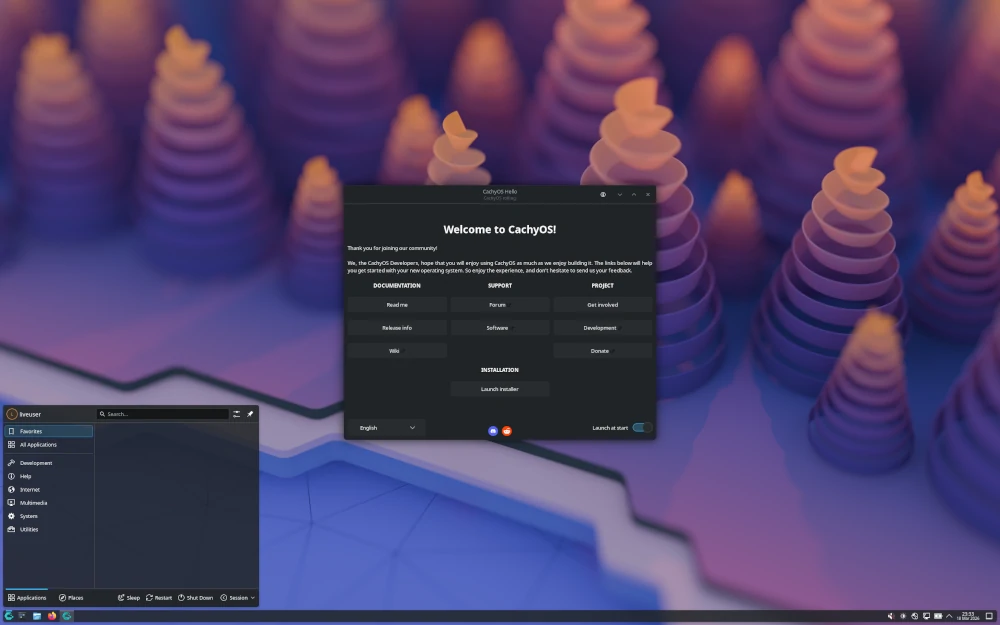
CachyOS is the most interesting story in Linux distributions of the last 2 years. It’s an Arch-based rolling-release distribution that took the #1 spot on DistroWatch in mid-2025 and has held it through April 2026, which is unusual because most newcomers to the top spot get displaced within months once the novelty fades.
What’s driving the sustained attention is real: CachyOS ships a performance-optimized kernel built with architecture-specific compiler flags, targeting x86-64-v3 and x86-64-v4 for modern hardware, along with LTO (Link Time Optimization), PGO (Profile-Guided Optimization), and BOLT post-link optimization applied to select packages.
The result is measurably faster performance on compatible hardware, and users have reported FPS improvements in gaming workloads alongside lower desktop latency compared to standard Arch setups.
CachyOS ships with KDE Plasma as the primary desktop, a graphical Calamares installer that handles partitioning and bootloader setup cleanly, a dedicated Handheld Edition optimized for devices like the ROG Ally and Legion Go, and first-class gaming support through a custom Proton fork (Proton-CachyOS) with FSR 4 support.
The April 2026 release, the third ISO of the year, added Shelly as the default GUI package manager replacing Octopi, DNS-over-HTTPS support via blocky for encrypted DNS queries, fingerprint-based sudo authentication, and a clean post-install snapshot created automatically as a baseline restore point.
The one honest caveat: CachyOS is Arch-based, which means it’s a rolling release, and if you’re not comfortable occasionally troubleshooting a package update that breaks something minor, Linux Mint or Zorin OS will serve you better.
But for experienced users who want Arch’s flexibility with real hardware performance gains and a sane installer, CachyOS is the most compelling option in the top 10 right now.
Conclusion
We’ve covered the 10 Linux distributions generating the most community interest in 2026, from the performance-tuned CachyOS holding the top spot to Ubuntu staying relevant despite slipping in the PHR rankings.
The list looks meaningfully different from where it stood in 2024, with Zorin OS entering the top 10 on the back of the Windows 10 EOL wave, CachyOS climbing from #8 to #1, and EndeavourOS cementing itself as the Arch gateway of choice for users who want the real thing without the 3-hour installation process.
The most useful thing you can do with this list is pick 2 or 3 distributions that sound interesting and spin them up in a live USB session before committing to an install.
Every distro on this list ships a bootable live image that lets you try the full desktop environment before touching your disk, and the experience of actually using a desktop for 20 minutes tells you more than any article will.
If your daily driver is on this list, let us know what keeps you there, and if it isn’t, drop it in the comments and tell us which distro you think should have made the cut.